Topics · Sharing the road
Sharing the road: DMV test questions
Pedestrians, bikes, motorcycles and trucks. Here are 66 questions like the ones on the written test, with answers and explanations.
 Video lessonThe School BusCan you pass a school bus?
66 questions with answers
1. A pedestrian is about to cross at a corner with no painted lines. You…
- Go, since there are no lines
- Yield only if they're already mid-street
- Yield; corners have crosswalks too
- Honk so they wait
Show answer
Answer: Yield; corners have crosswalks too
Most corners have a crosswalk even without paint. The pedestrian goes.
2. You see a person with a white cane or guide dog near the street. You must…
- Honk to warn them
- Hurry past before they cross
- Always give them the right of way
- Shout out when it's safe for them to cross
Show answer
Answer: Always give them the right of way
White cane or guide dog: they may not see you. Let them go, no honking.
3. You're passing a bicyclist. How much room do you give?
- A few inches is enough
- Any amount, as long as you honk
- None: the cyclist must move onto the sidewalk
- At least about 3 feet, or more
Show answer
Answer: At least about 3 feet, or more
Many states require 3 feet or more. If it doesn't fit, wait a bit.
4. You've parked on the street. Before opening your door on the traffic side…
- Check only the inside rearview mirror
- Honk, then open it
- Open it fast and hop out
- Look for bikes and cars coming
Show answer
Answer: Look for bikes and cars coming
Dooring a cyclist is ugly. Look before you open.
5. A motorcycle is in the lane ahead. Can you share the lane with it?
- No, it gets the full lane
- Yes, if it's going slowly
- Yes, to pass it without changing lanes
- Yes, if you hug the edge
Show answer
Answer: No, it gets the full lane
A motorcycle is a full vehicle: it gets the whole lane.
6. You're following a motorcycle. How much distance do you keep?
- The same or more than for a car
- Less, since it's small
- Very close behind so the rider can see you
- Half of what you'd give a car
Show answer
Answer: The same or more than for a car
Motorcycles can stop really fast. Give them extra room.
7. Why should you check mirrors and blind spots carefully for motorcycles?
- They always go faster than the cars around them
- They're small and easy to miss
- They don't use lights by day
- They never use turn signals
Show answer
Answer: They're small and easy to miss
A motorcycle fits right in your blind spot. Look twice.
8. If you can't see the side mirrors of the truck ahead of you…
- You're safe from the wind and road spray
- You're at the perfect distance
- You can pass it on the right
- The driver can't see you either
Show answer
Answer: The driver can't see you either
That's its No-Zone. Can't see their mirrors? They can't see you. Back off!
9. A large truck swings left before making a right turn. You…
- Honk so the driver hurries up and finishes the turn
- Wait behind it, not on its right
- Pass it on the left at the corner
- Squeeze past it on the right
Show answer
Answer: Wait behind it, not on its right
Trucks swing wide to turn. Squeeze in there and you get squished.
10. You just passed a big truck. What should you avoid when moving back over?
- Keeping your speed
- Cutting in close and braking
- Using your turn signal
- Waiting to see it in your mirror
Show answer
Answer: Cutting in close and braking
Big trucks need much longer to stop. Don't cut them off.
11. A school bus stops with flashing red lights and its stop arm out, on a road with no median. You…
- Pass slowly if no kids are visible near the bus
- Pass if you honk first
- Stop only if you're behind it
- Stop, whether behind it or oncoming
Show answer
Answer: Stop, whether behind it or oncoming
Red lights on the bus mean everyone stops until they turn off. Divided roads: check your handbook.
12. A fire truck with its siren on is coming the other way on a two-way street. You…
- Pull to the right and stop
- Speed up to get out of the way
- Stop right where you are in your lane
- Keep going, it's on the other side
Show answer
Answer: Pull to the right and stop
On a two-way road, even when it's oncoming: pull right and stop.
13. Traffic is backed up on the far side of the railroad tracks. You…
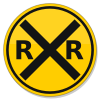
- Stop with one wheel on the tracks
- Wait before the tracks for room
- Cross and stop on the tracks
- Cross and wait on them if you don't hear a train
Show answer
Answer: Wait before the tracks for room
Never stop on the tracks. Only cross if your whole car fits on the other side.
14. A vehicle has an orange triangle with red borders on the back. It means…
- It's an emergency vehicle
- It's a slow-moving vehicle
- It's carrying hazardous materials
- It's about to turn
Show answer
Answer: It's a slow-moving vehicle
Orange triangle means slow-moving vehicle, like a tractor. Slow down early.
15. You see someone riding a horse along the road. You…
- Pass fast so the horse isn't scared
- Honk so they move over
- Slow down and pass wide
- Flash your high beams and honk to warn them
Show answer
Answer: Slow down and pass wide
Horses spook easily. Slow, wide, and quiet.
16. A funeral procession with headlights on is passing. You…
- Cut in if there's a gap
- Honk to keep them moving
- Pass the whole line on the right side
- Yield; don't cut into the line
Show answer
Answer: Yield; don't cut into the line
Show respect: don't cut the line. Exact rules vary by state.
17. Where are a big rig's blind spots (the "No-Zone")?
- On the sides, close behind, and in front
- Only on the left, where the driver sits
- Only behind, since it has side mirrors
- None: it sits so high it sees everything
Show answer
Answer: On the sides, close behind, and in front
A big rig has blind spots all around. Linger in one and the driver doesn't know you exist.
18. A tractor-trailer is backing into a loading dock and blocks your way. You…
- Squeeze past on one side to beat it
- Pull up close behind it and honk
- Zip behind it quickly before it gets there
- Wait, stopped at a distance, until it's done
Show answer
Answer: Wait, stopped at a distance, until it's done
The driver can barely see behind. Patience, kiddo: wait back and let them finish.
19. Compared to a car, a loaded big rig needs this much distance to stop…
- Less, since its tires are bigger
- The same, since it has more brakes
- Much more distance
- Less, since it's heavier and grips better
Show answer
Answer: Much more distance
The heavier it is, the harder it stops. Never take away its braking room.
20. A big rig is braking for a light and leaves space in front. Do you cut into that gap?
- No, it needs that space to stop
- Yes, the driver sits high and will always see you
- Yes, if you signal before moving in
- Yes, trucks stop faster than cars
Show answer
Answer: No, it needs that space to stop
That gap isn't empty: it's the truck's stopping room. Cut in and you could get hit.
21. A city bus at its stop signals to pull back into traffic. You…
- Speed up to get past before it pulls out
- Let it in if safe; in many states it's the law
- Honk so it waits until you've gone by
- Pass it by crossing the double yellow line
Show answer
Answer: Let it in if safe; in many states it's the law
That bus carries a lot of people in a hurry. Let it out; several states require it.
22. Light rail tracks run next to your lane and a train is coming. Do you turn left in front of it?
- Yes, because the train must yield to you
- Yes, if the signal for your lane is green
- No, wait for it; a train can't swerve
- Yes, if you signal early enough
Show answer
Answer: No, wait for it; a train can't swerve
A train has no steering wheel and stops slowly. It always wins. Exact rules vary by city and state.
23. You're behind a farm tractor on a 2-lane road. When do you pass?
- On the right shoulder, so you stay out of the other lane
- As soon as you can, even on a curve or hill
- Never; you must follow it until it turns off
- Where passing is allowed and it's clear
Show answer
Answer: Where passing is allowed and it's clear
A tractor is slow, but that's no reason to pass blind. Wait for a straight with a clear view.
24. At night in the country, a horse-drawn buggy is ahead of you. You…
- Flash your high beams so it pulls over
- Pass close and fast so the horse doesn't spook
- Slow down early and pass with plenty of room
- Honk so it moves off the road
Show answer
Answer: Slow down early and pass with plenty of room
It's very slow, so you close in fast. Brake early, pass wide and quiet.
25. You're turning right and a bicyclist is coming up on your right. You…
- Turn quickly before the bike gets there
- Let the bike go by, then turn
- Pass the bike, then turn in front of it
- Honk and make the turn slowly
Show answer
Answer: Let the bike go by, then turn
Cutting off a bike while turning is a classic crash. Check your right and wait.
26. A bicyclist is riding in the lane, not hugging the edge. What's true?
- You may honk until they move over
- They have a vehicle's rights and duties
- They must always yield to you
- They must ride on the sidewalk instead
Show answer
Answer: They have a vehicle's rights and duties
A bike is a vehicle, kiddo. Riders move out to dodge potholes or doors. Give them room.
27. You see kids on bikes near the street in your neighborhood. What do you expect?
- That they may do something sudden, so go slow
- That they'll always look before crossing
- That they'll move over as soon as they hear you
- That they know the rules like an adult does
Show answer
Answer: That they may do something sudden, so go slow
Kids dart out without looking. Keep your foot ready on the brake when you see them.
28. An electric scooter is riding at the edge of your lane. You…
- Follow closely so the rider hurries up
- Treat it like a bike and give it room
- Pass close; it's small and slow anyway
- Honk so the rider gets on the sidewalk
Show answer
Answer: Treat it like a bike and give it room
They're small, quick, and sometimes wobbly. Treat them like a bike: room and patience.
29. At night you're driving on a poorly lit street. What do you do about pedestrians?
- Use high beams even with oncoming cars
- Honk at every corner to warn them
- Nothing; at night they must watch for your lights
- Slow down: in dark clothes they're hard to see
Show answer
Answer: Slow down: in dark clothes they're hard to see
Someone in black can appear right on top of you. Slow down and scan the edges.
30. An ice cream truck is stopped with kids around it. You…
- Pass very slowly, ready to stop
- Pass quickly so the kids don't come close
- Honk so they step out of the way
- Pass on the kids' side if you fit
Show answer
Answer: Pass very slowly, ready to stop
With ice cream on their minds, kids don't see cars. Some states have special rules for these trucks.
31. A person in a wheelchair is crossing slowly and your light turns green. You…
- Go around behind them if there's room
- Wait until they finish crossing
- Inch forward to hurry them along a bit
- Honk so they move faster
Show answer
Answer: Wait until they finish crossing
A green light doesn't let you run anyone over. Wait calmly, kiddo.
32. In a work zone, the flagger shows you "STOP," but the traffic light is green. You…
- Stop only if you see workers nearby
- Obey the flagger and stop
- Go, since the light outranks the flagger
- Honk and go through carefully
Show answer
Answer: Obey the flagger and stop
In a work zone, the flagger outranks the light. They can see what you can't.
33. Why is it easy to misjudge an oncoming motorcycle's speed?
- It's small, so it looks farther and slower
- Motorcycles always go faster than the limit
- Motorcycles have no turn signals or brake lights
- Their headlights are brighter than a car's
Show answer
Answer: It's small, so it looks farther and slower
The bike gets there sooner than you think. Before turning in front of one, look twice.
34. The motorcycle ahead moves from side to side in its lane. Why might it?
- To avoid potholes, grates, or debris
- It wants you to pass on that side
- It's showing off and should never do that
- It wants you to follow more closely
Show answer
Answer: To avoid potholes, grates, or debris
A pothole your car barely feels can knock down a bike. Give it room to maneuver.
35. A motorcycle has its turn signal on but isn't turning. You want to pull out. You…
- Pull out, since it's surely turning
- Flash your lights so the rider turns it off
- Speed up to cross before it turns
- Wait until you see it really turn
Show answer
Answer: Wait until you see it really turn
Many bike signals don't shut off by themselves. Don't trust it: wait until it actually turns.
36. There are cows loose on the road. You…
- Slow down or stop until they pass
- Honk loudly and drive between them
- Speed up to get by before they move
- Nudge toward them with the car to scare them off
Show answer
Answer: Slow down or stop until they pass
A cow weighs over a thousand pounds and is in no hurry. Be patient; she won't rush.
37. At a railroad crossing, the red lights start flashing and the bell rings, but you don't see a train. You…
- Slow down and cross if you don't hear the horn
- Cross quickly, since no train is in sight yet
- Stop and wait until the lights stop flashing
- Stop for a moment, then cross carefully
Show answer
Answer: Stop and wait until the lights stop flashing
Red lights and a bell mean STOP. The train gets there sooner than you think, kiddo.
38. The gates at a railroad crossing start coming down. You…
- Stop and wait until they're all the way up
- Go around them in the other lane if no train is close
- Duck under them if your car is low enough
- Speed up to get through before they're down
Show answer
Answer: Stop and wait until they're all the way up
Never go around or under the gates. Wait until they rise and the lights stop.
39. In most states, when you must stop at a railroad crossing, where do you stop?
- 100 feet or more back, where the warning signs begin
- About 5 feet from the rail, as close as you can get
- Between 15 and 50 feet from the nearest rail
- Right on the first track, to see the train better
Show answer
Answer: Between 15 and 50 feet from the nearest rail
Not too close, not too far: 15 to 50 feet. The train is wider than the rails.
40. The crossing has two or more tracks. A train just passed and the lights are still flashing. You…
- Go around the gates, since they must be stuck
- Inch forward, since the danger has already passed
- Wait: another train may be coming on the other track
- Cross as soon as the last car of the train goes by
Show answer
Answer: Wait: another train may be coming on the other track
One train can hide another coming the other way. Wait until the lights go off.
41. You drive a stick shift and you're about to cross railroad tracks. You…
- Shift up to a higher gear right on top of the rails
- Pick your gear before and don't shift on the tracks
- Press the clutch and coast across in neutral
- Stop on the tracks so you can change gears calmly
Show answer
Answer: Pick your gear before and don't shift on the tracks
If you stall while shifting on the rails, you're in trouble. Pick your gear first.
42. You reach a railroad crossing with no lights or gates, just the crossbuck sign. You…
- Cross normally: no lights means no train
- Honk and cross without slowing down
- Slow down, look both ways, and listen
- Only check whether a train horn is sounding
Show answer
Answer: Slow down, look both ways, and listen
With no lights, you're the lookout. Turn down the radio, look hard, and listen.
43. Why is it dangerous to try to beat an approaching train?
- It looks farther away and slower than it is
- Because the engineer can steer around you
- Trains always brake in time when they see a car
- It's only dangerous at night, when it's hard to see
Show answer
Answer: It looks farther away and slower than it is
A big train fools your eyes and can take a mile or more to stop. You won't win, kiddo.
44. You're about to cross light rail tracks in the city. What do you keep in mind?
- It's quiet and fast: look both ways
- If you hear no bell, it's safe to cross without looking
- It always stops at every corner to let you go
- It's so slow you can pass in front without trouble
Show answer
Answer: It's quiet and fast: look both ways
Light rail is nearly silent and can't stop fast. Trust your eyes, not your ears.
45. The school bus ahead turns on flashing YELLOW lights. What does it mean?
- You can pass it quickly before it stops
- It's done loading the kids and is about to leave
- It has a problem and you should pass it carefully
- It's about to stop: slow down and get ready
Show answer
Answer: It's about to stop: slow down and get ready
Yellow on a bus is the warning; red is the STOP. Start slowing down now.
46. You're stopped behind a school bus with red lights flashing. When can you go?
- As soon as you see the last child get on the bus
- When the car in front of you decides to go first
- When the red lights stop and the STOP arm folds back
- After the bus has been stopped for about 30 seconds
Show answer
Answer: When the red lights stop and the STOP arm folds back
The lights and the arm decide, or the driver's signal. Even then, go slowly: a kid may dart out.
47. The school bus turned off its lights and is pulling away. Kids who just got off are by the road. You…
- Go slowly, ready to brake if one crosses
- Speed up to pass the bus before it gets going
- Honk so the kids stay up on the sidewalk
- Keep normal speed, since the lights are off now
Show answer
Answer: Go slowly, ready to brake if one crosses
Kids don't always look before crossing. Lights off doesn't mean danger off.
48. On a highway with a raised concrete median, a school bus on the other side stops with red lights flashing. In most states…
- You don't have to stop, but pass carefully
- You stop, just as if you were behind it
- You must stop and turn off your engine until it leaves
- You stop only if you see kids crossing the median
Show answer
Answer: You don't have to stop, but pass carefully
With a physical median, most states don't make the other side stop. Some do: check your manual.
49. You see a school zone sign with flashing yellow lights and a speed limit. What does it mean?
- It's a suggestion; you can drive the normal limit
- That limit is only for the school buses
- That limit applies right now, while they flash
- It only applies if an officer is watching the zone
Show answer
Answer: That limit applies right now, while they flash
Flashing means kids are around. The school limit, often 15 to 25 mph, is for real.
50. In many states, how closely may you follow a fire truck that has its siren on?
- No closer than 50 feet
- 3 seconds, like any other vehicle
- No closer than 100 feet
- No closer than 500 feet
Show answer
Answer: No closer than 500 feet
Fire trucks brake and stop suddenly. Give them 500 feet and don't use them to clear your way.
51. Firefighters are working a fire on your street. You…
- Speed between the trucks so you're not in the way
- Stop for a moment to film it on your phone
- Park close by in case they need help
- Don't park nearby or stop to watch
Show answer
Answer: Don't park nearby or stop to watch
They need room to work and for more trucks to arrive. Keep moving, kiddo.
52. A fire hose is lying across the street. Can you drive over it?
- No, unless a firefighter tells you to
- Yes, hoses can hold a car's weight
- Yes, if you drive over it very slowly
- Only if it looks empty with no water inside
Show answer
Answer: No, unless a firefighter tells you to
Running over it can burst it or cut their water mid-fire. Wait or find another route.
53. You hear a siren but can't tell where it's coming from. You…
- Speed up to get out of the area fast
- Keep going until you see the lights right behind you
- Stop dead in the middle of your lane
- Turn down the radio and look for it
Show answer
Answer: Turn down the radio and look for it
Find it first; if it's coming your way, pull to the right. Calmly, not suddenly.
54. You're turning right and someone is crossing the street you're turning into. What do you do?
- Turn quickly before she gets to your side
- Wait until she finishes crossing, then turn
- Turn behind her without stopping
- Honk so she hurries up
Show answer
Answer: Wait until she finishes crossing, then turn
When you turn right, always check for people crossing. Wait until they finish crossing, then turn.
55. A woman is at the corner, waiting to cross in front of you. What do you do?
- Honk to let her know you're going
- Stay at the line and let her cross
- Go quickly before she steps off the curb
- Stop on top of the crosswalk
Show answer
Answer: Stay at the line and let her cross
People have the right-of-way in the crosswalk. Stay at the limit line and let her cross.
56. A man starts crossing in the middle of the block, where there's no crosswalk. What do you do?
- Honk and keep going
- Slow down and let him finish crossing
- Keep going: he's not supposed to cross there
- Swing into the other lane and pass fast
Show answer
Answer: Slow down and let him finish crossing
Even without a crosswalk, if someone is crossing you slow down or stop so they can finish crossing.
57. She's already past your lane, but she's still crossing the other one. You want to turn left. Do you go?
- Yes, but slowly behind her
- No: wait until she finishes crossing
- Yes: your lane is clear now
- Yes, if you honk first
Show answer
Answer: No: wait until she finishes crossing
You have to let the person finish crossing safely. If you turn left, you're heading right to where she's walking.
58. The school bus ahead turns on its flashing yellow lights. What do you do?
- Keep going: yellow lights don't require anything
- Slow down and get ready to stop
- Tailgate it so you don't lose your spot
- Pass it quickly before it stops
Show answer
Answer: Slow down and get ready to stop
The yellow lights warn that the bus is about to stop to let children off. Slow down and get ready to stop.
59. The school bus is stopped on the other side of the street, with its red lights on and the STOP arm out. What do you do?
- Keep going: the bus is going the other way
- Stop: with red lights, traffic stops in both directions
- Honk and go
- Drive past slowly on the side
Show answer
Answer: Stop: with red lights, traffic stops in both directions
When a school bus flashes its red lights, cars in both directions stop until the children cross and the lights go off.
60. The students already crossed, but the bus still has its red lights on. Can you pass it now?
- Yes, if you go very slowly
- No: stay stopped while the red lights are flashing
- Yes, if you honk first
- Yes: nobody's crossing anymore
Show answer
Answer: No: stay stopped while the red lights are flashing
You stay stopped while the red lights keep flashing, even if you don't see anyone. Go only after they turn off.
61. You're in a school zone and the crossing guard steps into the street holding up a STOP sign. What do you do?
- Go around her slowly
- Stop, then go as soon as the kids pass
- Stop and wait until she's out of the street
- Honk so she hurries up
Show answer
Answer: Stop and wait until she's out of the street
Near a school with children outside, the speed limit is 25 mph. Always obey the crossing guard: if she holds up her STOP sign, stop before the crosswalk and wait until she's out of the street.
62. You're turning right and a person with a white cane starts crossing at the corner. What do you do?
- Honk to warn them
- Stop mid-turn, on top of the crosswalk
- Stop and let them cross all the way, without honking
- Go behind them slowly
Show answer
Answer: Stop and let them cross all the way, without honking
A white cane or a guide dog means the person may be blind. They always have the right-of-way: stop before the crossing, not on top of it, and wait until they finish crossing. Don't honk: you could startle them.
63. You're behind a bicyclist and a car is coming toward you. There isn't room to give three feet. What do you do?
- Pass close: they're going slow
- Wait behind and pass when you can give three feet
- Honk so they move over
- Pass quickly before the car gets there
Show answer
Answer: Wait behind and pass when you can give three feet
When you pass a bicyclist, leave at least three feet between your car and them. If there's no room because someone is coming toward you, wait behind at their speed and pass once there's space.
64. You parked next to the curb and you're about to open your door. A bicyclist is coming in your mirror. What do you do?
- Open a little so they see you
- Open: they have to go around you
- Wait until they pass, then open
- Open quickly before they get there
Show answer
Answer: Wait until they pass, then open
Before opening the door on the traffic side, check your mirror and look over your shoulder. If a bicyclist, motorcycle or car is coming, wait until it passes: a door opened suddenly can knock a bicyclist down.
65. You just passed a big rig and want to move back into its lane. When do you move over?
- Once you've left plenty of room (you can see all of it in your rearview mirror)
- Right away: as soon as you pass it
- When the trucker flashes their lights
- Move over and tap your brakes to warn it
Show answer
Answer: Once you've left plenty of room (you can see all of it in your rearview mirror)
Don't cut in right in front of a big truck: it needs much more room to stop, and if you slow down in front of it, it could hit you. Keep going until there's plenty of space (a good trick: when you can see all of it in your rearview mirror), then change lanes with signal, mirror and shoulder check.
66. You're next to a big rig, alongside its trailer, and it signals toward your lane. What do you do?
- Stay beside it: it has to see you
- Honk and keep going the same
- Slow down and drop back to where you can see its mirrors
- Speed up to get next to its cab
Show answer
Answer: Slow down and drop back to where you can see its mirrors
Big trucks have huge blind spots on the sides, in front and behind. If you can't see the truck's side mirrors, the driver can't see you. Don't stay beside it: slow down, or pass quickly and safely.
Practice this topic in the app
With voice, games and review of your mistakes.